
Web Application Development Explained – Build Scalable, Secure & Engaging Web Apps
The modern digital-first world has seen businesses no longer being defined by just physical presence. Their websites, applications, and experiences are essential in their operations and development. Web application development comes in at this point. Web applications are driving the business ecosystem today, whether it is through customer portals and dashboards, SaaS platforms, or enterprise systems.
Web applications are interactive and dynamic, unlike static websites, and have specific functions that should be carried out. They enable users to interact with systems, access services, and transact tasks in real time. Web applications have become a pillar of digital transformation, whether it is the process of data management, conducting transactions, or facilitating communication.
This blog will discuss what web application development is, how it works, and how a company can create scalable, secure, and interactive web applications that deliver long-term value.
What Is Web Application Development?
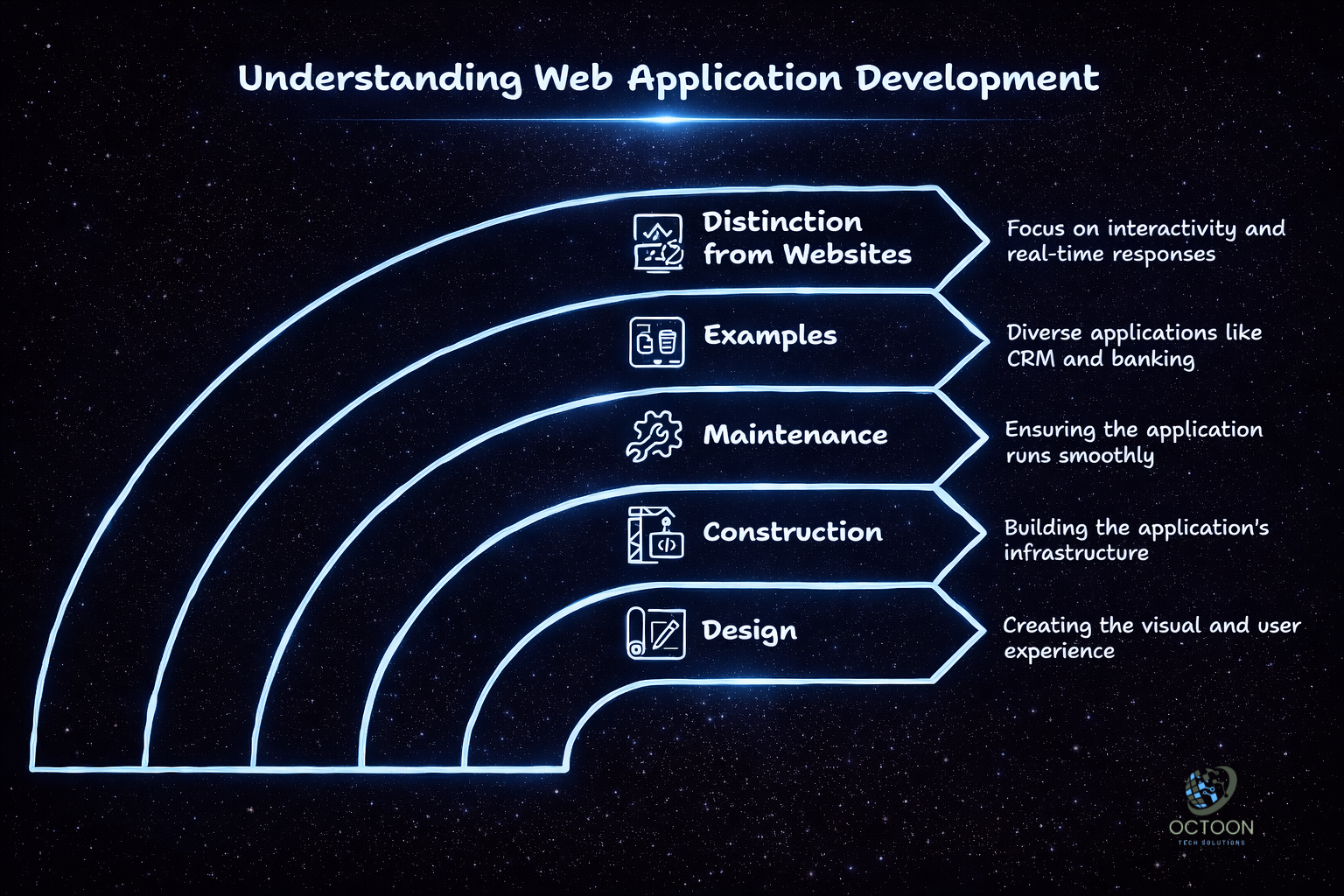
Web application development involves designing, constructing, and maintaining web-based applications. They are web-based applications that are stored on a server and can be used through the internet without having to install them on personal devices.
A web application may be a mere sign-in system or an elaborate corporate solution. They are customer relationship management software, e-commerce software, project management software, and online banking portals.
The major distinction between a web application and a website is functionality. A site is mainly a store of information, whereas an application gives the user the ability to interact with data, carry out activities, and get real-time responses.
Why Web Applications Matter for Modern Businesses
Business is not just an internet presence in the world today. They require systems that will make them efficient, have a better customer experience, and facilitate development. Web applications meet these requirements by offering powerful, accessible, and scalable solutions.
Accessibility is a key benefit of web apps. They can be accessed by users with any device using a browser: desktop, tablet, or smartphone. This is what allows them to be perfect in internal processes as well as in services to the customers.
It is also through web applications that automating processing is simplified, while the manual labor is also decreased. This enhances productivity and reduces errors.
Moreover, they facilitate real-time cooperation. The teams are able to cooperate and exchange information, and communicate with each other, irrespective of their location.
Key Types of Web Applications
Knowing the various kinds of applications on the web helps companies to select the appropriate solution according to their requirements.
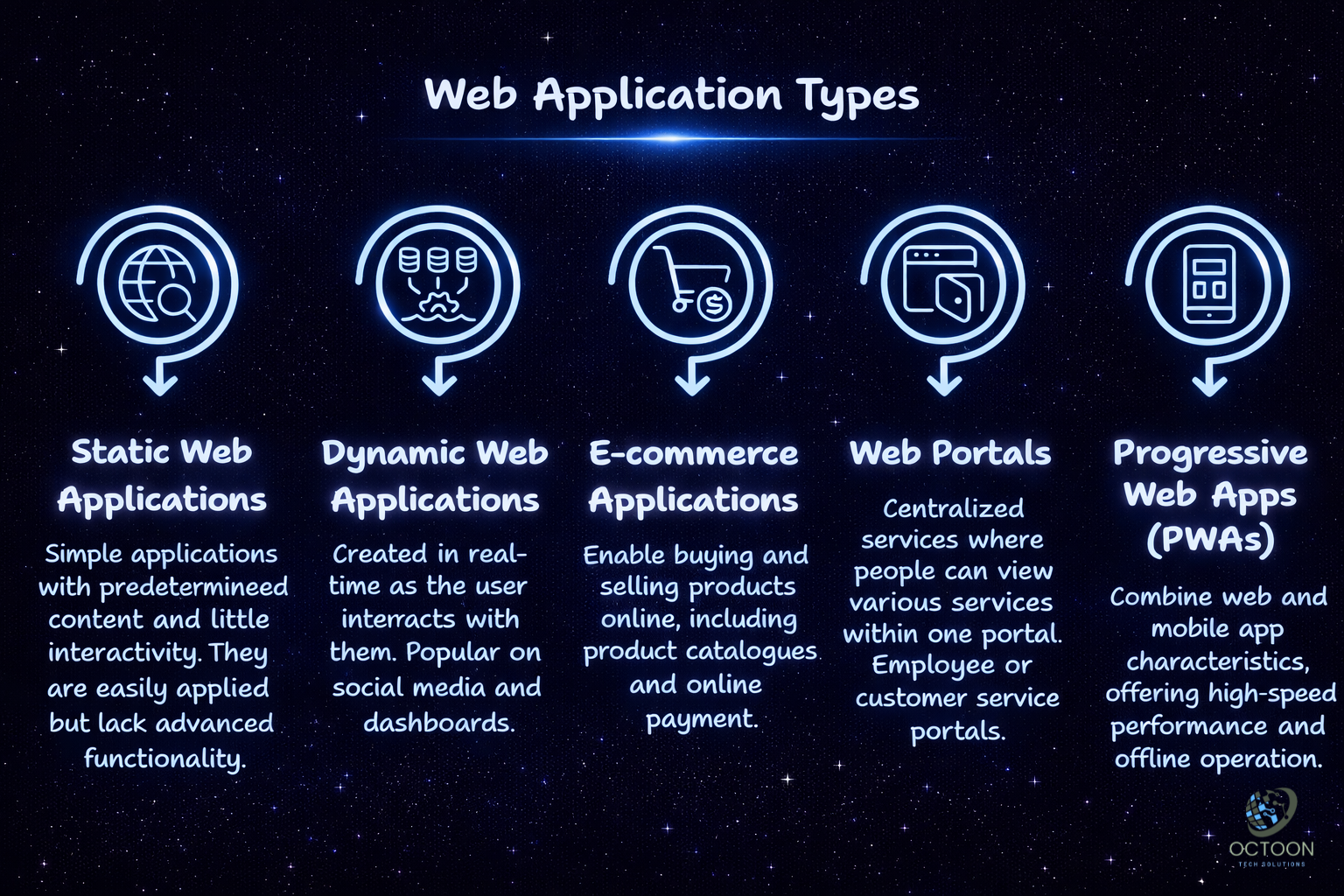
Static Web Applications
These are simple applications that have predetermined content and very little interactivity. They can be easily applied, but they do not have advanced functionality.
Dynamic Web Applications
Dynamic apps are created in real-time, as the user interacts with them. They are popular on such platforms as social media and dashboards.
E-commerce Applications
Such applications make it possible to buy and sell products online, such as product catalogues, online payment applications, and online order management.
Web Portals
The development of web portals is aimed at developing a centralized service where people can view various services within one portal. They can be employee portals or customer service portals.
Progressive Web Apps (PWAs)
PWAs have the characteristics of web and mobile apps, providing high-speed performance, offline operation, and app experiences.
Both types are used for different purposes and business aims, and the selection is conditioned by the needs of users.
The Web Application Development Process
The development of an effective web application takes a systematic process. There are usually a number of stages in the development process.
1. Planning and Requirement Analysis
The step includes the perception of business objectives, the target audience, and features. Having clarity of planning makes the project remain on track.
2. Design and User Experience (UX)
Design is very important in user engagement. The interface is designed in such a way that it is user-friendly and intuitive.
3. Development
The front-end and back-end of the application are developed by the developers. The front-end is used to engage with the users, whereas the back-end is used to process the data and perform server-side logic.
4. Testing and Quality Assurance
The application is pre-tested on performance, security, and functionality. This facilitates ease of use.
5. Deployment and Maintenance
After the application is live, it needs to be maintained in order to correct any issues, enhance performance, and introduce new features.
This is the order of events in professional web development services as they offer reliable and high-performing applications.
Web App Development vs Traditional Software
The conventional software is installed in particular devices and frequently relies on operating systems. Web app development, on the other hand, concentrates on the solutions regarding the browser that can be accessed from any point.
Web applications have several benefits:
- No installation required
- Simple upkeep and maintenance.
- Cross-platform compatibility
- Lower infrastructure costs
The web apps are the favored option for modern businesses due to these advantages.
Building Scalable Web Applications
One of the most significant aspects of web application development is scalability. With the growth of the business, the application has to serve more traffic, users, and data without any performance problems.
A scalable application is developed with a scalable architecture that can be increased accordingly. Cloud-based infrastructure is also instrumental in ensuring scalability, where businesses can scale the resources according to demand.
Scalability is also provided by efficient database management, load balancing, and efficient code. By making plans now, an unplanned upgrade will not be necessary in the future to prevent any expensive upgrades.
Ensuring Security in Web Applications
Web application development is sensitive in the area of security. Web apps process sensitive data and, therefore, need to be safeguarded against cyberattacks.
Popular security control measures are:
- Information security through encryption of information during transmission.
- Use secure authentication to prevent unauthorized access.
- Periodic security repair of vulnerabilities.
- Surveillance and recording to warn of suspicious behavior.
The competent web development company will make sure that security in every development is incorporated. This not only saves data but also creates trust among the users.
Creating Engaging User Experiences
One of the significant success factors of a web application is the user experience (UX). Even highly developed functionalities would not work when the application is not user-friendly.
A catchy web application must contain:
- An easy-to-use and clean interface.
- Fast loading times
- Multi-device responsive design.
- Easy navigation and usability.
The behavior and preferences of the users will enable the developers to develop applications that match the expectations and retain the users.
The Role of Custom Website Development
The needs of every business are different, and this is why the development of unique websites can be the most appropriate solution. Custom solutions are not based on ready-to-use templates, but are customised to special requirements, such as custom web development solutions.
The custom development enables enterprises to:
- Develop personalized features and capabilities.
- Make it better performing and scalable.
- Integrity with existing systems.
- Retain complete design and brand control.
An effectively designed custom solution offers value and flexibility in the long run.
Web and Mobile App Development Companies: A Combined Approach
The effectiveness of many businesses today necessitates the need for web and mobile applications to be adopted in order to access a larger audience. Web and mobile app development companies come in with a complete solution here.
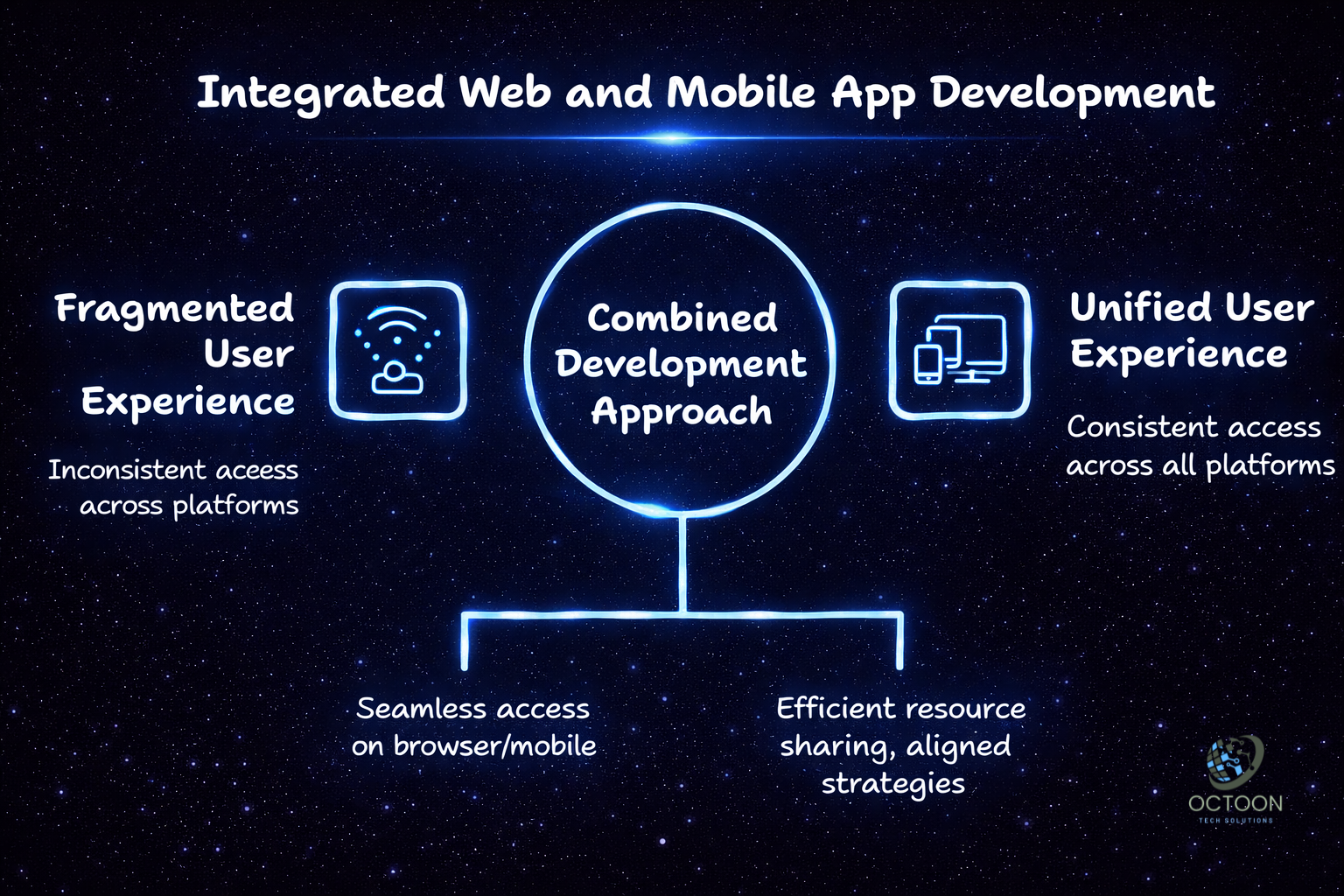
With web/mobile development, businesses can develop similar user experiences between platforms. This will make sure that the user can have access to the services either on a browser or on a mobile device in a seamless manner.
Integrated development also enhances efficiency in terms of the sharing of resources and alignment of strategies across platforms.
Web Portal Development for Centralized Access
The development of web portals is based on the creation of platforms with the integration of various services. Organizations use these portals to offer users easy access to information and tools.
Examples include:
- HR management employee portals.
- Service and support customer portals.
- Learning and collaboration portals.
Portals can be used to enhance efficiency through the centralization of resources as well as simplifying user interactions.
Choosing the Right Web Development Agency
Choosing a proper web development agency is a very important process in developing a successful web application.
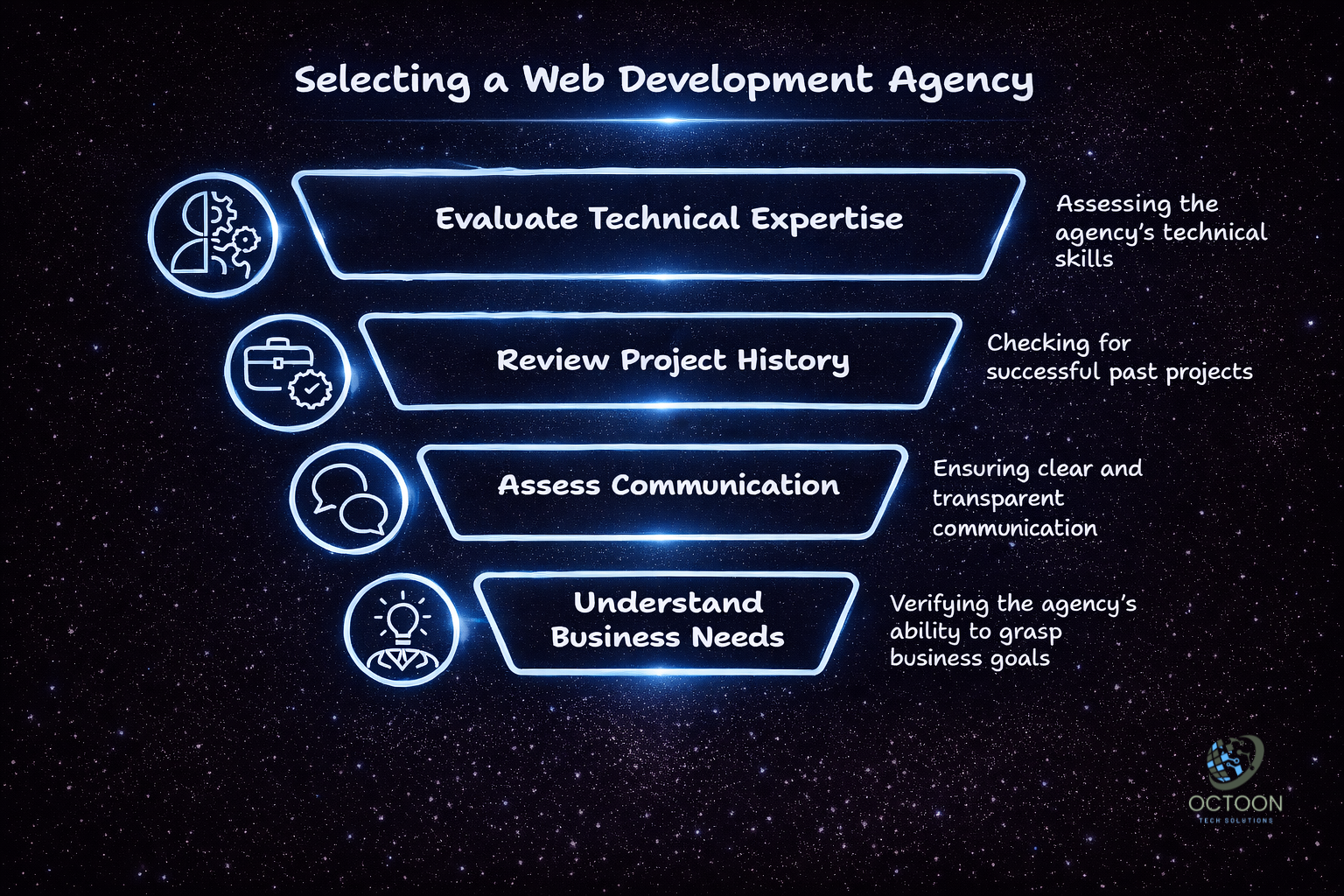
An agency should be reliable and must possess:
- Strong technical expertise
- There is a record of successful projects.
- Easy to understand communication and transparency.
- The skill of perceiving business requirements.
The correct choice of a partner will make the development process smooth and provide the intended outcomes.
Challenges in Web Application Development
Web application development can be associated with several challenges, even with its benefits.
One of the most frequently encountered issues is the issue of managing complex functionality while still being able to perform. With the increase in applications, they will find it hard to manage without planning.
Another consideration is security, of which web apps are frequently the subjects of a cyber threat.
It can also be difficult to guarantee that various devices and browsers are compatible.
Nevertheless, these obstacles can be surmounted through best practices and up-to-date technologies by professionals with experience.
The Future of Web Application Development
Innovation and emerging technologies are expected to shape the future of web application development.
Artificial intelligence, cloud computing, and automation are some of the trends that are defining the future of web apps. These technologies help in making smarter, faster, and more efficient applications.
Another phenomenon that is becoming more popular is Progressive Web Apps (PWAs), which provide app-like experiences directly within browsers.
Due to the ever-changing user expectations, companies have had to embrace new development practices in order to remain competitive.
Conclusion
Web applications have been incorporated into the current business processes. Web application development is important in digital transformation, whether through efficiency improvement or user experience.
Businesses are capable of creating applications that can lead to long-term value by paying attention to scalability, security, and user engagement. Whether it web app development, custom website development, or web portal development, the wrong approach can go a long way.
This is because engaging a reputable web development service provider or a reliable web development agency will make sure that your application is developed to suit your present and future needs.
Web applications will always be on the frontline of innovation and aid businesses to expand and cope with the highly digitized world.
Here at Octoon Tech, we deliver custom web application solutions designed for performance, security, and scalability. Partner with us to create engaging digital experiences that move your business forward.
Frequently Asked Questions
What Is Web Application Development?
Web application development creates interactive, server-hosted apps accessed via browsers without local installation. Unlike static sites, these apps enable real-time user interactions like data processing and transactions, powering tools from e-commerce platforms to CRM systems.
Why Do Businesses Need Web Applications?
Web apps boost efficiency through cross-device accessibility, process automation, and real-time collaboration, reducing manual errors and costs. They support digital transformation by centralizing services in portals or PWAs, ensuring seamless experiences for customers and teams.
How to Build Scalable Web Applications?
What Security Measures Ensure Safe Web Apps?
Implement encryption, multi-factor authentication (MFA), secure coding practices, input validation, and continuous monitoring to protect against threats. Regular vulnerability patching and least-privilege access build user trust and compliance.
What Creates Engaging User Experiences in Web Apps?
Prioritize user-centric design with intuitive interfaces, fast load times, responsive layouts, and feedback loops like surveys and personas. Logical navigation and interaction design keep users engaged across devices.