
SaaS Development Explained: How Cloud Solutions Are Changing Business Forever
How technology is utilized by the business has transformed significantly within the last ten years. Businesses are moving beyond the use of traditional software applications fixed to individual devices and are opting to use saas software to operate their business, enhance effectiveness, and scale at a much greater pace. This change in cloud-based solutions has revolutionized access to the tools, collaboration, and value delivery to the customers by organizations.
SaaS, Software as a Service, is a model of software development where businesses are able to utilize applications on the internet without the concern of installation, maintenance, or infrastructure. SaaS solutions have become an essential component of the way the modern business works, starting with customer relationship management systems, ending with project management platforms, and accounting.
This blog will deconstruct what is SaaS development, how it functions, and how it is redefining the future of business in different industries.
What Is SaaS Software?
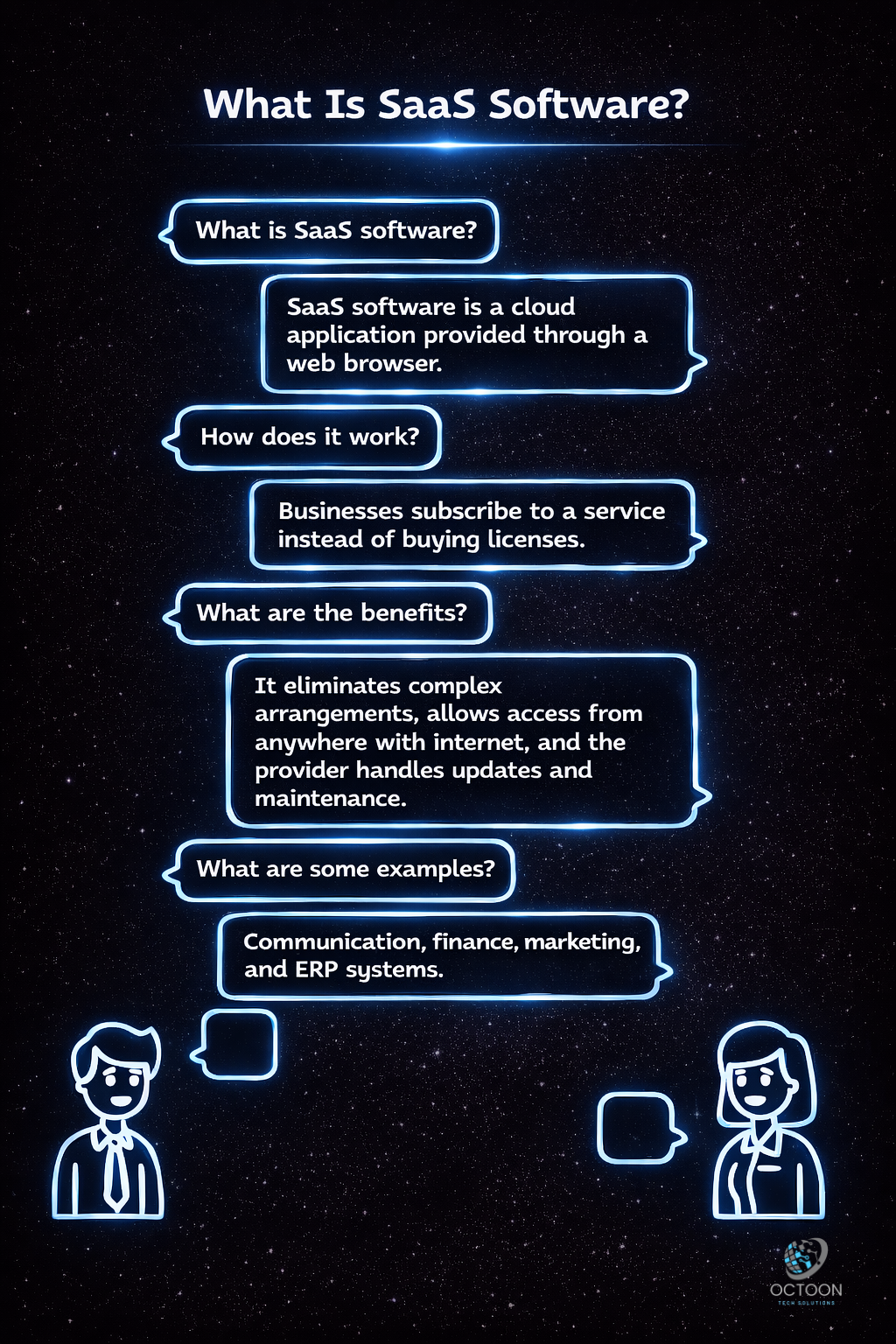
SaaS software is a cloud application, meaning that the application is saved in distant servers and provided to customers within a web browser. Businesses do not buy software licenses and install them on the computer; instead they subscribe to a service and can access it online.
The model eliminates the use of complex arrangements and enables those using it to log in at any point, provided one has internet connectivity. The service provider takes care of updates, security patches, and system maintenance. It is a convenient and affordable solution.
Communication, finance, marketing, and enterprise resource planning systems are some of the popular examples of SaaS. These solutions are intended to be scalable, i.e., businesses can upgrade or downgrade their usage with ease depending on their requirements.
How SaaS Development Works
SaaS development is a process that entails the design, development, and maintenance of cloud-based applications that can be accessed by several users via the internet. The SaaS applications are built with the concept of scalability, multi-tenancy, and continuous updates in mind, unlike traditional software development.
A typical SaaS development life cycle will involve:
- Designing the application architecture to support more than one user.
- Creating a battle-hardened and scalable backend.
- Creating a user-friendly design.
- Combining APIs and third-party services.
- Performance, security, and reliability testing.
- Implementation of the application on the cloud infrastructure.
An outsourced SaaS software development firm ensures that each phase of development aligns with business goals, which is why many companies invest in custom software development to build scalable and future-ready solutions.
Why Businesses Are Shifting to SaaS Solutions
The adoption of SaaS at a rapid pace is not by chance. Companies are dumping their conventional systems to adopt SaaS due to its flexibility, cost-saving, and better performance.
Accessibility is one of the greatest advantages. SaaS applications are accessible to the employees wherever they are, and remote working and international cooperation become significantly more straightforward.
Another important factor is cost efficiency. The businesses make a subscription payment instead of spending a lot of money on hardware and software licenses, and this helps to lower start-up costs and enables the business to plan its finances more appropriately.
Automatic updates are also offered by SaaS solutions. This implies that the newest features are constantly available to the companies without the necessity to update them manually.
Moreover, SaaS technology is very scalable. With an increase in business, it does not require significant infrastructure changes to increase its usage. This is why many organizations are adopting cloud-based solutions to improve efficiency and reduce dependency on traditional infrastructure.
The Role of a SaaS Software Development Company
The development of a successful SaaS product needs cloud architecture, security, and user experience expertise. It is here that a saas software development company comes in very handy.
These firms are also involved in developing strong, scalable, and secure applications that are specific to the requirements of a business. They assist companies in transforming ideas into practical products and, at the same time, maintain performance and reliability.
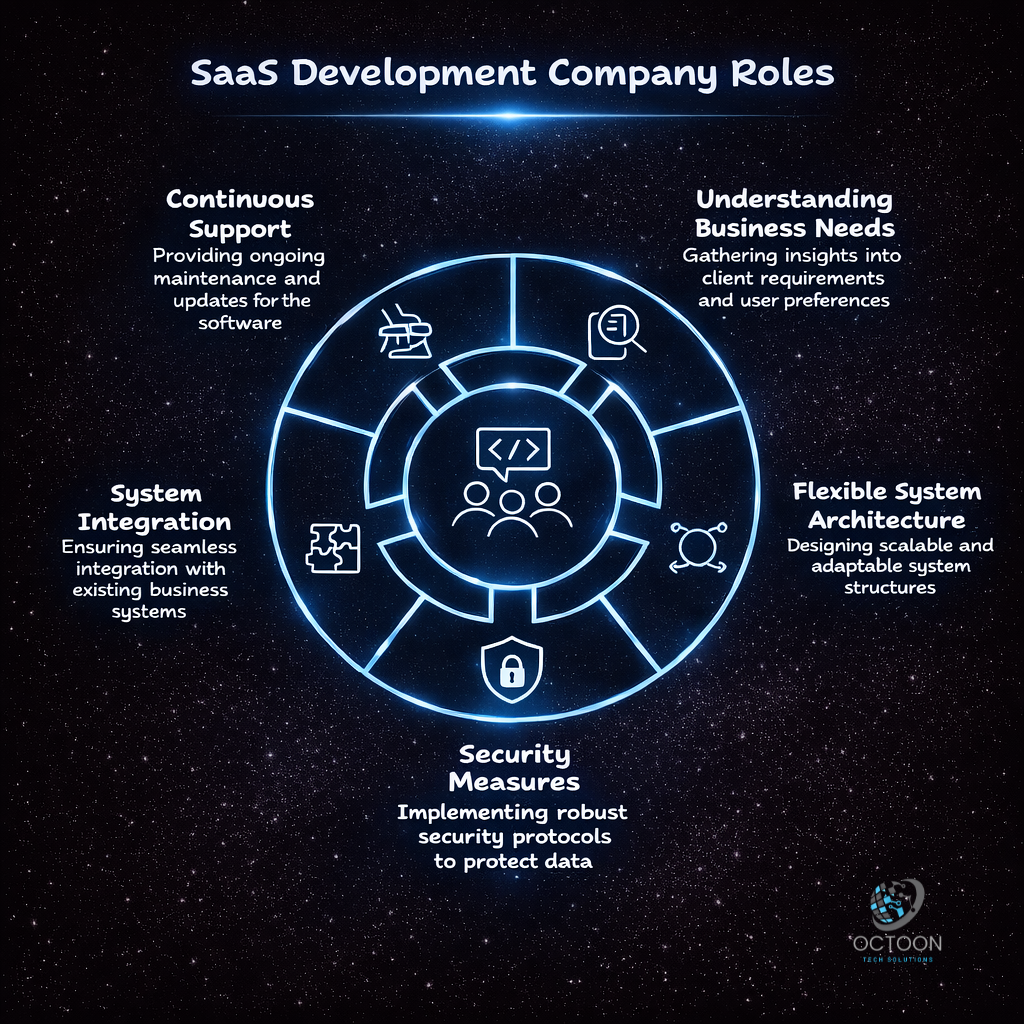
A professional development partner pays attention to:
- Learning the needs of the business and what the users want.
- Architectural design of a flexible system architecture that can be scaled.
- Enforcing good security measures.
- Making sure that it integrates quite well with the existing systems.
- Giving continuous support and updates.
Collaborating on an established team minimizes risks of development and assists companies in opening their SaaS offerings sooner.
Key Features of Successful SaaS Applications
SaaS applications do not have equal performance. The most successful platforms have some key characteristics that make them easier to use and dependable.
Scalability is one of the most significant ones. A SaaS application must be capable of supporting more and more users without performance problems.
Security is also very important. As the data is stored in the cloud, it will require strong encryption, access controls, and compliance to store sensitive information.
User-friendly design will make sure that the customers find it easy to navigate the platform and accomplish the tasks easily.
Integration capabilities enable the SaaS applications to integrate with other applications and systems to form a smooth workflow.
Regular updates to software keep it up to date on a regular basis and enhance functionality as time goes by.
These characteristics are normally provided using professional software development services of saas, and thus a high-quality final product.
SaaS Software Development Services: What to Expect
Companies that intend to develop SaaS applications usually use dedicated saas software development services. These services include all the phases of the product life cycle, such as validating an idea, all the way to after-sales service.
In the first phase, the developers collaborate closely with companies to learn what they want to achieve and how far the project will go. These involve defining target users, features, and technical requirements. Businesses often require custom development solutions to ensure their SaaS applications meet unique operational requirements.
In the course of development, teams aim to develop a scalable architecture and secure coding rules. The cloud infrastructure is chosen very well to be reliable and performant.
Once deployed, continuous support will be necessary. This involves monitoring the performance of the systems, bug fixing, and the addition of new features depending on the feedback of the user.
Through the provision of end-to-end solutions, the development of SaaS services assists businesses in having a competitive advantage in the market.
The Role of a SaaS Software Developer
A skilled SaaS software developer is behind every successful SaaS platform; they know the technology and the needs of the users.
Developers shall be tasked with the job of creating the backbone of the application that shall be able to work effectively in various circumstances. They operate on the front and back end, making the user experience a smooth one.
Besides the coding, the developers are also concerned with performance optimization, security enhancement, and improvement in scalability. They also test and improve the application continuously until it is up to industry standards.
The development team should be powerful enough to offer innovation and technical skills that are necessary for the development of reliable SaaS solutions.
SaaS vs Traditional Software: A Clear Difference
Knowing the distinction between SaaS and traditional software is useful in outlining the reasons why companies are switching.
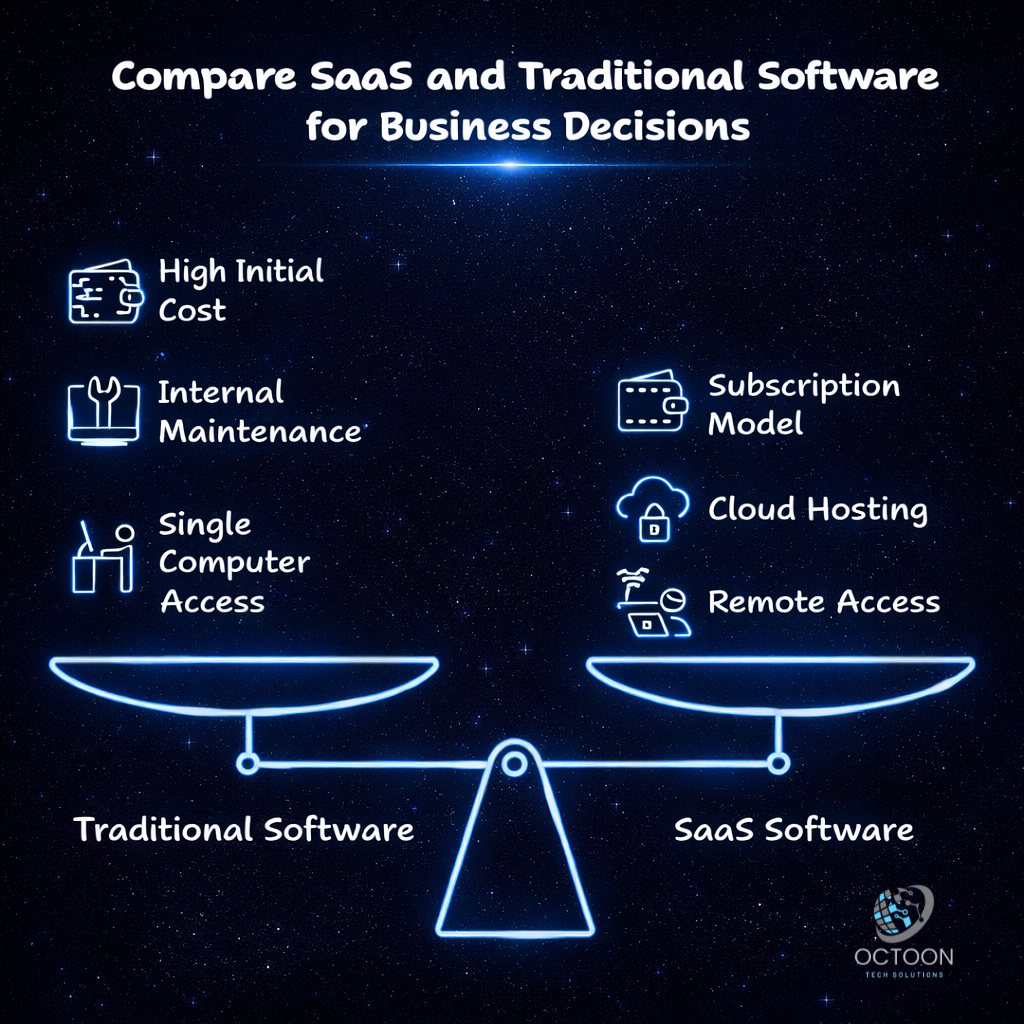
Conventional applications need to be installed on single computers, and their initial cost can be very high. Internal maintenance, updates, and security are costly and time-consuming.
SaaS applications, on the other hand, are hosted in the cloud and accessed via a browser. This helps to avoid installation and will ease the load of IT teams.
SaaS is more flexible as well. It can be accessed remotely by various devices, which is suitable in the current workplace.
The subscription model is also an added advantage to its attractiveness since the businesses only pay as they consume it.
How SaaS Software Companies Drive Innovation
A SaaS software company is instrumental in leading industries in terms of innovation. These companies can also offer cloud-based solutions with the aim of helping businesses to embrace new technologies without significant investments.
The SaaS companies constantly upgrade the product by adding new features, improving the performance, and reacting to the feedback of the customers. This persistent innovation has made sure that businesses will always be in a position of using the modern tools.
They are also taking advantage of the developed technologies like artificial intelligence, machine learning, and data analytics to provide smarter solutions.
This means that businesses will be able to automate their processes and use data to acquire insights and make better decisions.
Choosing the Right SaaS Software Development Agency
The process of choosing the appropriate saas software development company is an important move that business establishments should undertake when deciding to develop a SaaS product.
The appropriate agency must possess an excellent portfolio, technical ability, and vision of cloud technologies. You should select a partner who suits your business objectives and be able to provide scalable solutions.
Another important factor is communication. An agency with good clients takes their clients through the development process, keeping them informed and also making sure that there is transparency at all stages.
Being experienced in your field may also help since the agency gets to learn certain challenges and needs.
With the selection of the appropriate partner, the companies will be able to secure a successful process of development and the launch of a successful product.
Benefits of SaaS for Modern Businesses
The SaaS solutions have numerous advantages that render them suitable for contemporary organizations.
They enhance efficiency through automation of routine work and minimisation of manual work. This enables the employees to concentrate on more strategic activities.
SaaS increases teamwork as well. Team members are able to work in real time, no matter where they are located.
The other significant advantage is reliability. Cloud providers guarantee a good uptime and backup of data in case of failure of the system.
Access control and encryption are security measures that ensure sensitive data is secured, and businesses do not betray their customers.
On the whole, SaaS allows organizations to work more efficiently and adjust to the new market realities.
Challenges in SaaS Development
SaaS has numerous benefits, but when it comes to creating a SaaS application, there are a number of challenges associated with it.
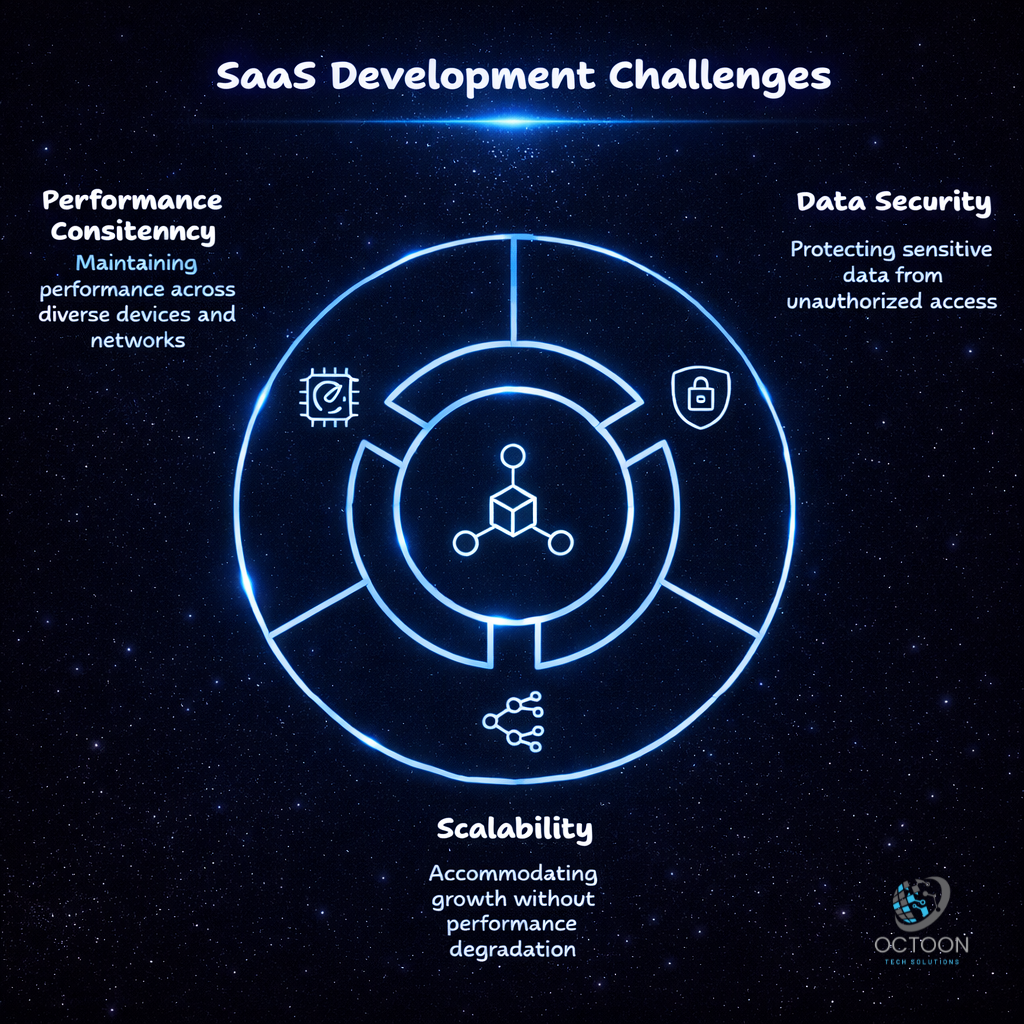
Ensuring data security is one of the primary issues. Following the fact that applications contain a lot of sensitive data, developers should provide a high security level.
Scalability may also be complicated. There should be applications that are made to accommodate expansion without compromising performance.
The other difficulty is the ability to ensure similar levels of performance under various device and network scenarios.
These challenges notwithstanding, these issues can be overcome by experienced development teams through the application of best practices and sophisticated technologies.
The Future of SaaS Development
SaaS has a bright future, and cloud computing and digital technologies keep developing.
Both businesses will have more companies moving to SaaS solutions in search of higher levels of flexibility and efficiency. SaaS applications will also be made smarter and easier to use with the new technologies of AI and automation.
By integrating SaaS with other technologies, new opportunities for innovation will be generated. Companies can develop closer and more efficient systems.
The future of business will always be characterized by SaaS development as it is becoming more and more central to the demand for cloud-based solutions.
Conclusion
SaaS development has revolutionized the way businesses use technology. By offering flexible, scalable, and cost-effective solutions, saas software has become an essential part of modern operations.
From improving efficiency to enabling global collaboration, SaaS solutions provide significant advantages over traditional software. Businesses that invest in SaaS development can stay competitive and adapt to changing market demands.
Whether you’re working with a saas software development company, exploring saas software development services, or planning to build your own platform, understanding the fundamentals of SaaS is key to success.
As technology continues to evolve, SaaS will remain at the forefront of digital transformation, helping businesses grow and innovate in a rapidly changing world.
At Octoon Tech, we deliver scalable, secure, and future-ready SaaS solutions designed for your business needs. Let’s turn your vision into a powerful cloud-based product that drives growth and innovation.
Frequently Asked Questions
What is SaaS software?
SaaS, or Software as a Service, is a cloud-based model where applications are hosted on remote servers and accessed via a web browser, eliminating the need for local installation, maintenance, or infrastructure management. Businesses subscribe to these services for tools like CRM, project management, and accounting, with providers handling updates and security. This enables anytime access with an internet connection, making it scalable and cost-effective.
How does SaaS development differ from traditional software development?
SaaS development focuses on multi-tenancy, scalability, and continuous updates in cloud architecture, supporting multiple users simultaneously without performance issues. Unlike traditional software, which requires on-device installation and manual maintenance, SaaS involves designing resilient backends, user-friendly UIs, API integrations, and rigorous testing for security and reliability. The lifecycle emphasizes cloud deployment for seamless accessibility across devices.
What are the main benefits of SaaS for businesses?
SaaS offers cost efficiency through subscription models that reduce upfront hardware and licensing expenses, allowing pay-as-you-go pricing. It provides accessibility for remote work, automatic updates without manual intervention, and high scalability to match business growth. Additional perks include improved collaboration, reliability with minimal downtime, and enhanced security via provider-managed encryption and compliance.
What are key challenges in SaaS development?
Major challenges include ensuring data security and compliance with standards like GDPR amid cloud storage of sensitive information. Scalability demands robust infrastructure to handle growing user loads without performance degradation, while maintaining consistent reliability across devices and networks. Experienced teams address these through strong encryption, proactive monitoring, and best practices.
Why choose a SaaS development company?
A specialized SaaS company brings expertise in cloud architecture, security, and user-centric design to build scalable, custom solutions aligned with business goals. They handle the full lifecycle—from ideation and integration to deployment and ongoing support—reducing risks and accelerating time-to-market. This partnership ensures innovation, performance optimization, and adaptability to technologies like AI.