How Modern Software Development is Powering the Next Digital Revolution
When you interact with any type of computer, whether for gaming or apps, or inventory management with spreadsheets, or just using the operating system, you are engaging with software. Software connects all digital experiences together; it provides computers and other devices with a way to utilize technology and execute tasks efficiently and effectively.
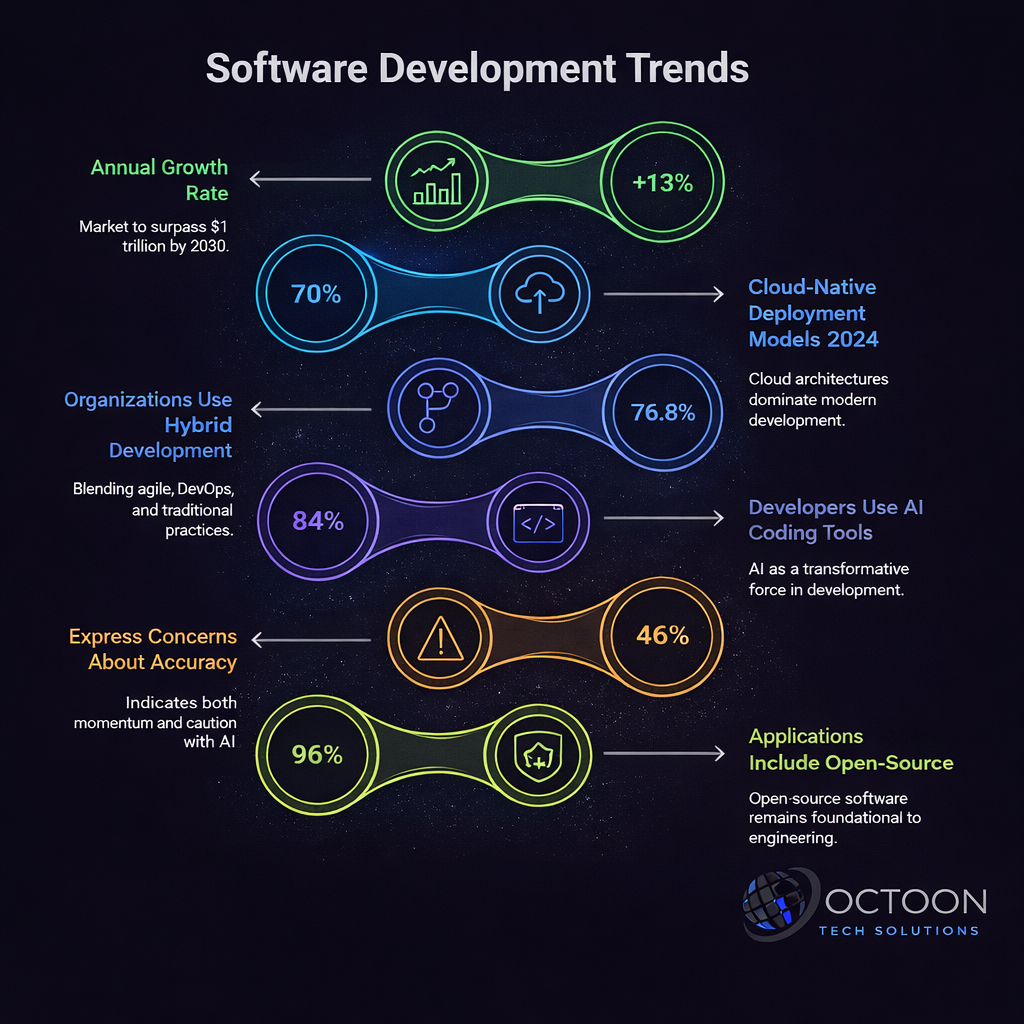
Software Development is a structured approach for developing, designing, and maintaining software programs. The software development lifecycle includes a thorough understanding of the user's needs, architecting the software solution, coding the software solution, testing for reliability, and deploying the final product. Within each of these stages, software can be refined frequently until it becomes a reliable, efficient, and user-friendly product.
Different programming languages, frameworks, and tools are used by developers to build software that solves real-life problems and simplifies everyday tasks.
The Evolution of Software Development
Software Development has grown and developed over time due to technological advancements, changing user requirements, and the push to create better, faster, and more reliable systems that are faster, smoother, and more dependable through the use of what is often called artificial intelligence.
As we have evolved from using punch cards to developing and using AI-based algorithms, we can see how far we have come since the advent of modern civilization. Software development has progressed beyond just being a technical craft; it is now the foundation for our world today.
From Punch Cards to Personal Computing
The evolution of software development has grown out of the evolution of technology and computers.
Initially, software development was cumbersome, overly rigid, and relied on a lot of manual programming. Software developers used to write machine-level instructions in binary that were only interpretable by a computer using punch cards.
The introduction of personal computers during the 1970s and 1980s precipitated enormous change. Increased availability of software, accelerated innovation, and rapidly emerging application development companies met an increasing amount of demand.
The Rise of the Internet and Mobile Apps
New ways to do business became available with the introduction of the internet through e-commerce websites, e-commerce apps, and mobile applications, which transformed the way businesses interact with consumers and enabled them to communicate at a much higher level than they ever could before.
As the internet became widespread, the attention of many businesses began to turn towards creating large-scale cloud-based systems that would allow them to connect with their customers, potential customers on a global scale, while providing the capability to support many, many users (thousands or millions) at once.
The emergence of smartphones made this even more apparent, as consumers now have a very powerful computer at their fingertips that can be accessed at all times from almost any location throughout the world, fueling the need for more advanced software development solutions across industries.
Why Software Matters More Today Than Ever
Most people today use software to communicate with others in almost every aspect of their daily lives: banking, shopping, health care, entertainment, etc. Today, software has gone from being a convenience to being a requirement for almost everything we do, leading to the rapid evolution of the next major digital revolution.
The Evolving Role of Software Developers in Today’s Digital World
Software development in the 21st century has changed its focus from writing code to problem-solving
The growth of software development due to advances in technology has changed the way people create and use technologies. Developers were traditionally limited to writing code for products. Now, developers have moved beyond this role to create systems that can adapt, learn, and solve complicated issues.
From Coders to Problem-Solvers
In today's fast-paced world, a developer is much more than someone who writes code. Developers have become thinkers, innovators, and strategic partners who impact the way that companies work and consumers interact with digital products. They work closely with teams inside software engineering firms
More and more software development companies expect that their developers will not only know how to create software but will also understand the reason for its existence.
Involved Earlier in the Process
As a result of the above, developers are no longer just waiting for their boss to tell them what needs to be done. Today, developers participate in the ideation phase of the development process and have a say in the features/functionalities of a product, understand the needs of the users, and can make suggestions to enhance or add to the current products.
Because developers now have more responsibility and work more closely with other departments in their organization, developers are expected to have excellent communication skills and a more complete picture of the overall impact of technology on the success of a company.
Adaptation to Rapid Change
As technology continues to advance rapidly, developers must continue to keep up with the latest advancements in tools and techniques , and trends. They need to embrace both flexibility & continuous learning as part of their role, to make sure they have the ability to be adaptable, which is key to any software development firm trying to compete in today’s marketplace.
Developers often use many different programming languages to create applications using the latest and best software development solutions.
Working in Collaborative Environments
Collaboration is a necessary skill for many companies. With telecommuting, using cloud-based platforms, and working with distributed teams, it is common that developers must collaborate with designers, product management professionals , and data specialists frequently.
Version control, instant messaging, & collaborative development tools allow for better communication among all team members so that everyone is on the same page.
Building Responsible Technology
Today, developers carry a high level of responsibility when developing software with regard to ethics, privacy, and security. As AI, data management, and automation are becoming part of our daily lives, developers should carefully consider the impact their work may have on real humans and communities around the globe.
Today, software developers serve many different functions as creators, collaborators, and critical thinkers. The role of developers is growing, and the impact they have on how the future will be constructed is greater now than ever.
Understanding What a Software Design Company Does
Software design companies help transform ideas into simple, user-friendly digital products that people enjoy using. Their main focus is improving user experience by creating intuitive and visually attractive solutions. They also support businesses in building stronger digital presence through innovation and smart design.
The development process starts by understanding business needs and user behavior in detail. Designers create workflow maps and interface layouts that are easy to navigate and visually clear. These companies also help solve business problems by automating tasks and improving overall productivity.
Unlike standard software providers, software design companies create customized solutions for each client. Teams of designers, developers, and clients work together to maintain consistency and quality. In the end, they build digital experiences that help businesses grow and provide real value to users.
Why Staying Updated With Tech Trends Matters
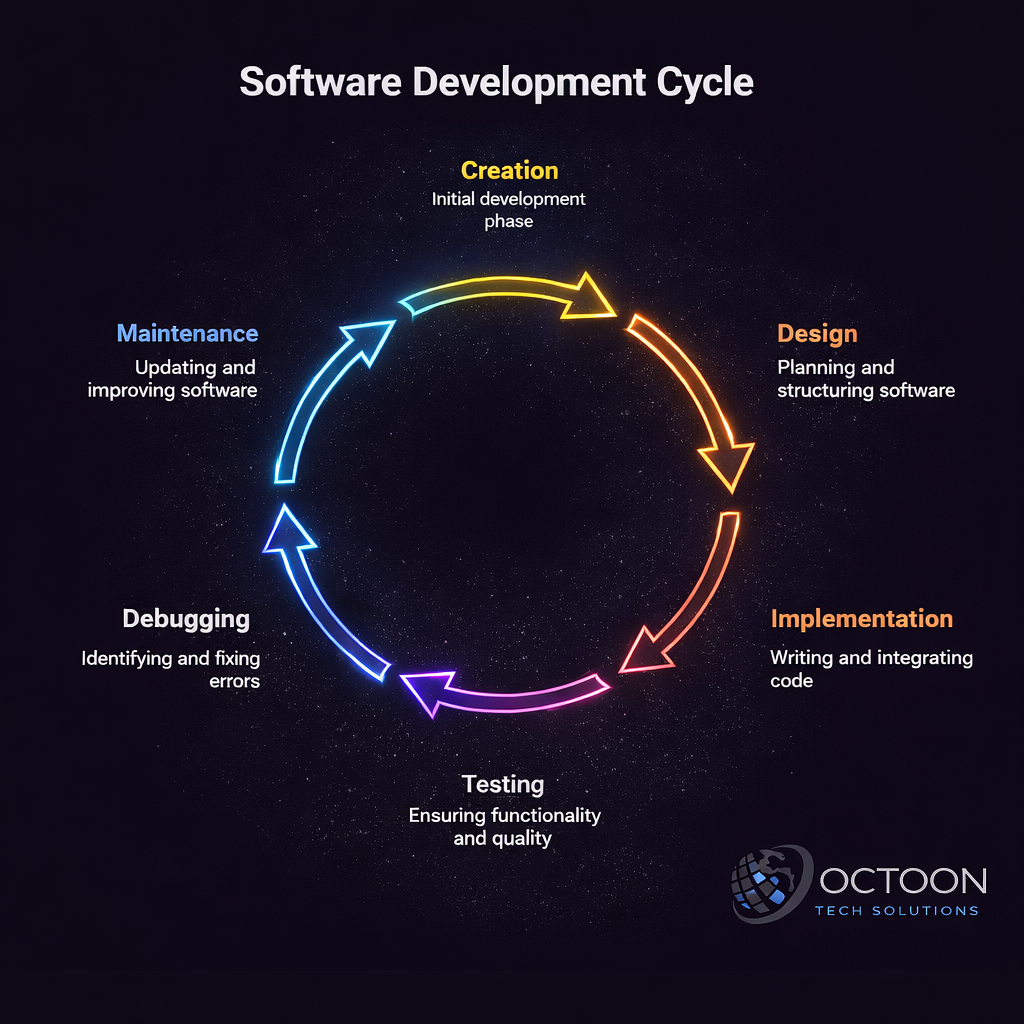
For software development companies and businesses of all kinds, keeping abreast of software development processes and emerging technology trends is essential. The rapid pace of change in the technology field makes previously established skills appear outdated. However, if developers continue to keep up with the latest trends and utilize them properly, it can give them and businesses a competitive advantage to achieve success.
Emerging technology trends are not simply buzzwords for the technology industry; these trends are actually being developed and implemented within each and every industry you can imagine: banking, health care, agriculture, hospitality, and the list goes on. For an individual developer, remaining current with the latest technology trends is not only an interest but a necessity to remain employable.
No one wants to wake up to find their current skills are no longer needed in the marketplace.
Employers today want to hire developers who have a solid foundation of computer science knowledge and can also adapt and learn about new tools, technologies, and processes. The capability to learn and adjust as technology continues to change is what will keep a developer a viable and valued contributor within the industry.
System Software
Every computer or device runs on the base-level system software that allows it to operate. The system software runs in the background and manages the hardware of your device while also providing a platform for all your applications to run on.
Examples of this type of software include operating systems (Windows, Mac OS, Linux, Android), device drivers, and various utility programs (antivirus, Disk Cleanup), as well as the firmware (BIOS) that allows the hardware to communicate with the software.
System software provides the connection between hardware and application software so that your device operates and functions properly.
Application Software
Application software consists of programs that allow users to perform specific tasks. Examples of this type of software include productivity software (Microsoft Office and Google Workspace), media software (Photoshop and video editing software), web browsers (Chrome, Firefox), video conferencing software (Zoom, Slack), and both educational and gaming software.
Application software connects people's needs to the technology they use to do their work, express themselves creatively, and learn and have fun.
Web-Based, Cloud, and SaaS Software
Web-based cloud software, also referred to as "software-as-a-service" (SaaS), runs through a web browser and does not require any installation on your computer or device. Users can access the software from any internet-connected device.
SaaS solutions are scalable, automatically updated, and provide the same tools regardless of the type of device being used. Examples of SaaS include Google Workspace, Microsoft 365, Slack, Zoom, Shopify, WordPress, Trello, Salesforce, and all types of cloud storage (e.g., Google Drive and Dropbox).
The ability to easily collaborate online in real-time, to maintain these types of solutions with minimal disruption to your work, and not to have to depend on one specific type of hardware are just a few of the advantages that Cloud and SaaS provide to users.
Mobile Application Software
Mobile applications are created for handheld devices such as smartphones and tablets. Mobile Applications fall within several areas, including productivity (e.g., Google Docs), Social (e.g., Instagram, WhatsApp), entertainment (e.g., Netflix, Spotify), and Utilities (e.g., Navigation, Banking, Health Trackers).
The benefits of mobile applications are invaluable because they provide people all over the world with easy access to the tools they need whenever they want and wherever they happen to be, and mobile applications are changing how people are working, communicating, and enjoying themselves.
AI and Machine Learning Software
AI & ML are applications that imitate human intelligence and learn from what is collected from data. For example, AI & ML produce virtual assistants (such as Siri, Alexa), recommendation engines (like Netflix, Amazon), and prediction tools from data analysis, and they also create autonomous vehicles in the automotive and robotics industries.
AI & ML applications empower smarter decision-making, automate repetitive tasks, and create meaningful insights from large volumes of data.
Cyber Security Software
Cybersecurity software protects computer systems and networks from cyber threats, including malicious software (e.g., malware) and unauthorized access to systems and data. In this area, important applications include antivirus software (i.e., Norton, McAfee), firewalls, encryption software, and backups.
The value of cybersecurity software lies in that it allows individuals or businesses to secure sensitive data or information and operate properly and securely.
Enterprise and Business Software
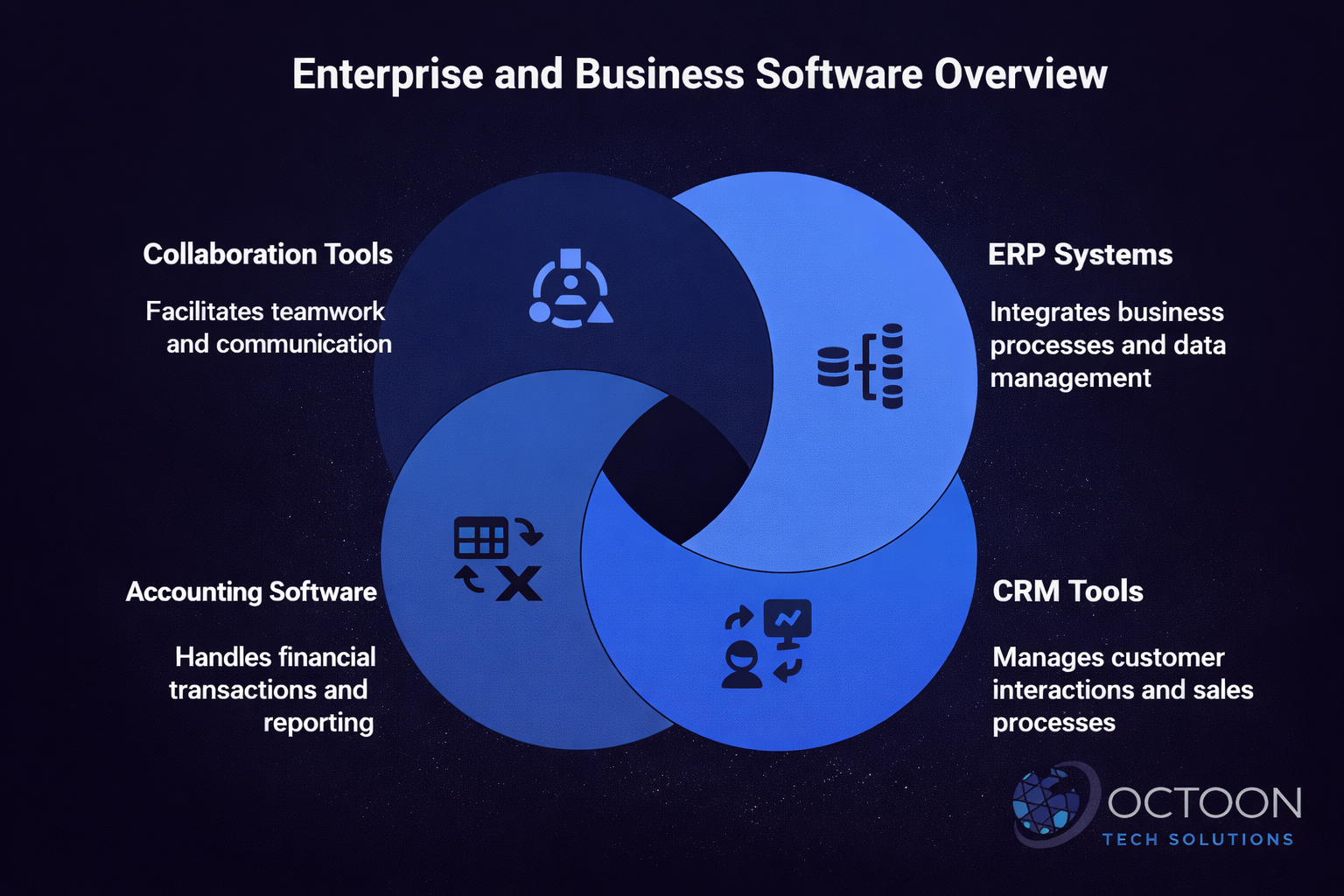
Business and Enterprise software includes the types of software used to facilitate the day-to-day operating and decision-making process for organizations. Examples of business and enterprise software include ERP Systems (e.g., SAP, NetSuite), CRM Software (e.g., Salesforce, HubSpot), and companies can also use accounting software or software that helps with collaboration (e.g., Teams, Asana). Many best software development companies specialize in building or customizing these solutions
The purpose of Business/Enterprise software is to streamline processes, improve efficiency, and ultimately increase productivity.
Emerging Software Categories
The software landscape is being transformed by a range of new technologies, which include:
1) Platforms for low-code/no-code development (like OutSystems, Bubble),
2) Blockchain and Web3 Technology for secure & decentralized apps (like Ethereum)
3) Advanced quantum software for computing (such as it will be used for Cryptography, Logistics, Science, etc.).
The importance of this new technology is that it enhances developer productivity, improves security/protects user privacy, and creates opportunities that were not possible with traditional computing methods.
Conclusion:
Software has driven innovation in virtually every aspect of today's digital life, from our work and communication to our entertainment and health. Developers create value by solving problems, collaborating, and creating meaningful digital experiences. Emerging technologies like AI, cloud solutions, blockchain, and quantum computing continue to evolve and change many sectors of the economy.
Therefore, for all software development companies and individual developers, it is critical to be aware of the latest developments, incorporate new technologies, and remember what users need to experience. Software development is changing how you connect to other people, businesses, and ideas as we experience the next digital revolution.
At Octoon Technologies, we offer software development services. We build user-friendly applications and deliver innovative digital solutions. Octoon Technologies helps businesses turn ideas into reality. Our skills in web, mobile, cloud, and new technologies make sure projects are functional, engaging, and prepared for the future.
If you are looking for the best software development companies to make your software vision happen, Octoon Technologies is the team to trust.
Frequently Asked Questions:
What is software development?
Software development involves planning, creating, and building computer programs and applications by understanding user needs, designing structures, writing code, testing, and deploying the final product. Developers use various programming languages, frameworks, and tools to solve practical problems and simplify tasks for users.
How has the role of software developers evolved?
Modern software developers have shifted from just coders to problem-solvers, innovators, and collaborators who participate early in projects, communicate with teams, adapt to rapid tech changes, and prioritize ethics, privacy, and security. They work in distributed environments with designers and managers using tools like version control to align on goals.
What does a software design company do?
A software design company transforms ideas into functional, user-friendly digital products like apps, websites, and custom software, focusing on user experience through research, workflow mapping, and intuitive interfaces. They collaborate closely with clients and teams to deliver tailored solutions that solve business challenges and enhance customer experiences.
What are the main types of modern software?
Key types include system software for managing hardware like operating systems (Windows, Linux); application software for tasks such as productivity tools (Microsoft Office) and browsers; cloud/SaaS like Google Workspace for scalable access; mobile apps for smartphones; AI/ML for intelligent systems like virtual assistants; security tools like antivirus; enterprise software such as ERP (SAP); and emerging categories like low-code platforms
Who provides custom software development for startups?
Several companies specialize in custom software development tailored for startups, offering scalable solutions, rapid prototyping, and support for MVPs without the overhead of building in-house teams.