Manufacturing Software Development That’s Revolutionizing Industrial Automation
Even a production line can have several major breakdowns in eight hours and still miss the daily goal. Materials are late, people are waiting, goods are delivered late, finished goods are not in the right place, and managers must spend half a day figuring out what went wrong.
Let's be honest, if you're a manufacturing business, these issues rarely happen in isolation. A time lag in one department can cause a time lag in the whole production. Sometimes, the machinery is perfectly capable of doing its job. The real problem is that the people, equipment, and software involved aren't working from the same information.
This is where manufacturing software development makes a difference. Rather than using multiple spreadsheets, manual updates, and disparate systems, manufacturers can easily integrate production planning, inventory, equipment data, and business operations. It is not just a more mechanised factory. It's a factory where they can make decisions with a greater understanding of what's going on.
The Machines Are Running. So Why Is Production Still Falling Behind?
While the purchase of automated machines may be expensive, it does not necessarily resolve all production issues.
Now let's pretend that there's a factory manufacturing parts of cars. It has the ability to produce hundreds of parts per hour, but the production manager still has to have supervisors enter the output data manually. The stock team keeps records for inventory separately, and the purchasing department places raw materials orders based on numbers from a previous report.
If there's a shortage, everyone tries to figure out what went wrong.
The factory has automated equipment, but its decision-making still depends on delayed information.
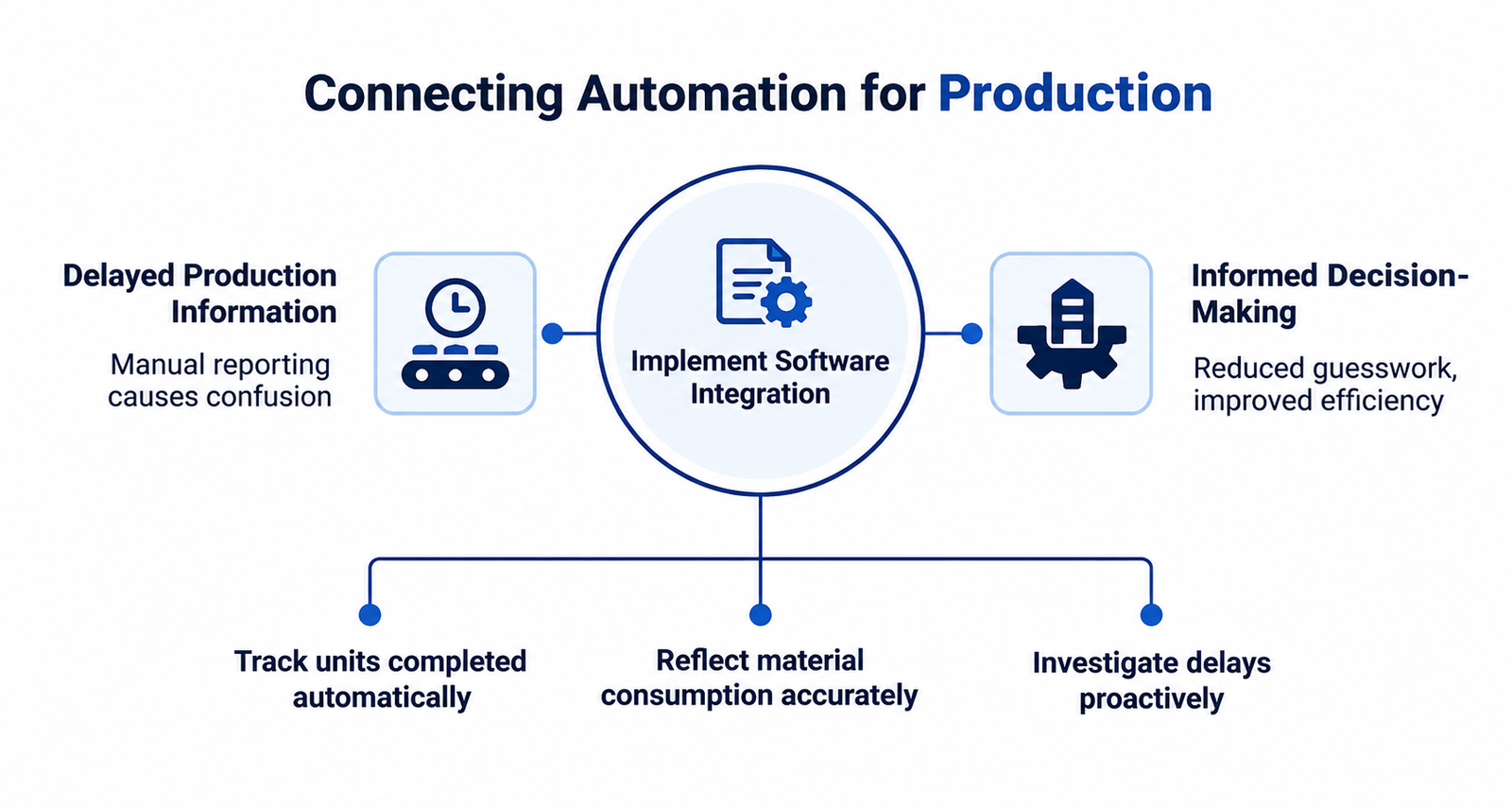
When all these activities are automated, and software is able to link them, manufacturing automation is more useful. Production data can indicate progress with the number of units completed. Material consumption can be accounted for in inventory records. Managers can identify actual output against the planned output and start to investigate delays before it impacts next order.
This doesn't mean every task should happen automatically. Some decisions require human approval, and certain machines must continue operating safely even when a network connection fails.
The point is to remove unnecessary guesswork from processes where better information can make a measurable difference.
When the Warehouse and Production Floor Disagree
The most frustrating experience for a production team is when they go to get material for a particular item, which is available in the inventory system, but the warehouse doesn't have an adequate supply of usable stock.
Or, maybe certain material is already assigned to another order. Damaged goods haven't been removed from the records. In other situations, staff members may not have had enough time to update the system after they moved the stock.
These discrepancies can delay production, trigger unnecessary purchases, and leave customer orders waiting.
Inventory tracking software lets businesses keep track of their stock, how much is in there, if anything is missing, and the flow of materials through their facility. It can also be used in conjunction with production planning to help teams determine the amount of material that a scheduled job consumes.
ERP software takes this step further by linking inventory to purchasing, finance, marketing, and other business areas.
When a customer order is received, for instance, an ERP system can assist the business in determining the availability of materials, estimate material needs, and arrange material procurement with production planning automation. The specific functions available will vary depending on the platform and configuration.
Production management software takes care of another aspect of the process. It assists teams in arranging work with orders, tracking production progress, recording resources used, and comparing actuals against the planned schedule.
Some manufacturing platforms combine these functions. Others require integrations between separate applications.
Not all of the questions really are which one has more features. It's whether your purchasing team, warehouse team, and production managers have access to those same facts and figures at any time, without having to re-enter them.
Not Every Factory Needs a Custom Software System
Custom software sounds attractive when existing systems don't work exactly as expected. But building a new application isn't always the smartest solution.
If you already have an existing manufacturing platform that meets your production planning, inventory, and reporting needs, then it might be easier to configure this existing platform as your production platform than build a new one.
Businesses need custom manufacturing software when they have a certain operational issue that they are able to solve with the help of software at a reasonable cost.
Let's assume a manufacturer using older machinery from several equipment suppliers. Each machine report their production data in different ways, and monitoring supervisors must open several systems to compare production and downtime.
It may not be necessary to develop a completely new manufacturing platform. It requires a custom application to pull together the data it has, standardize key metrics, and display them in a single dashboard.
Another manufacturer may have a specific inspection process not compatible with the approval process in their ERP. Those inspections could be handled by a smaller application which passes results back to the original application.
Both, however, focus on filling a well-defined niche instead of recreating software that is already functional.
Carefully assess your existing systems, available integrations, and places where employees are still using manual workarounds before making an investment in custom development. That investigation can uncover if you need to upgrade software, change configuration, or if you need to connect software applications.
A Machine Stopping for Ten Minutes Can Tell You a Lot
It costs money when your machine goes down, but it's only half the battle when that's the case. The manufacturers also want to know how frequently it occurs, its cause, and if the problem occurs repeatedly.
Operating information can be collected using software that is linked to appropriate equipment and sensors; stops can be recorded, and teams can use software to find repeated patterns.
Assume that during the afternoon shift a packaging machine has to stop a number of times. Personal interruptions can be a speck. After a few weeks, however, the records may show that the same fault is causing interruptions of production during a specific operation.
That information provides a focus for maintenance teams to explore.
If supported by reliable data and proper analysis, monitoring systems can also be used to facilitate predictive maintenance by detecting patterns related to equipment health issues. Predictions, however, are not necessarily guarantees. Falsely alerting due to poor sensor data, variations in operating conditions, or wrong assumptions.
The software should also be compatible with current industrial machinery and equipment, and its manufacturer should take this point into account. Communication protocols that are used on older machines and access to operational data may differ. Additional hardware or integration may be required.
The aim is to give maintenance teams better evidence for their decisions, not to promise that software can prevent every breakdown.
The Problems Often Begin After Installation
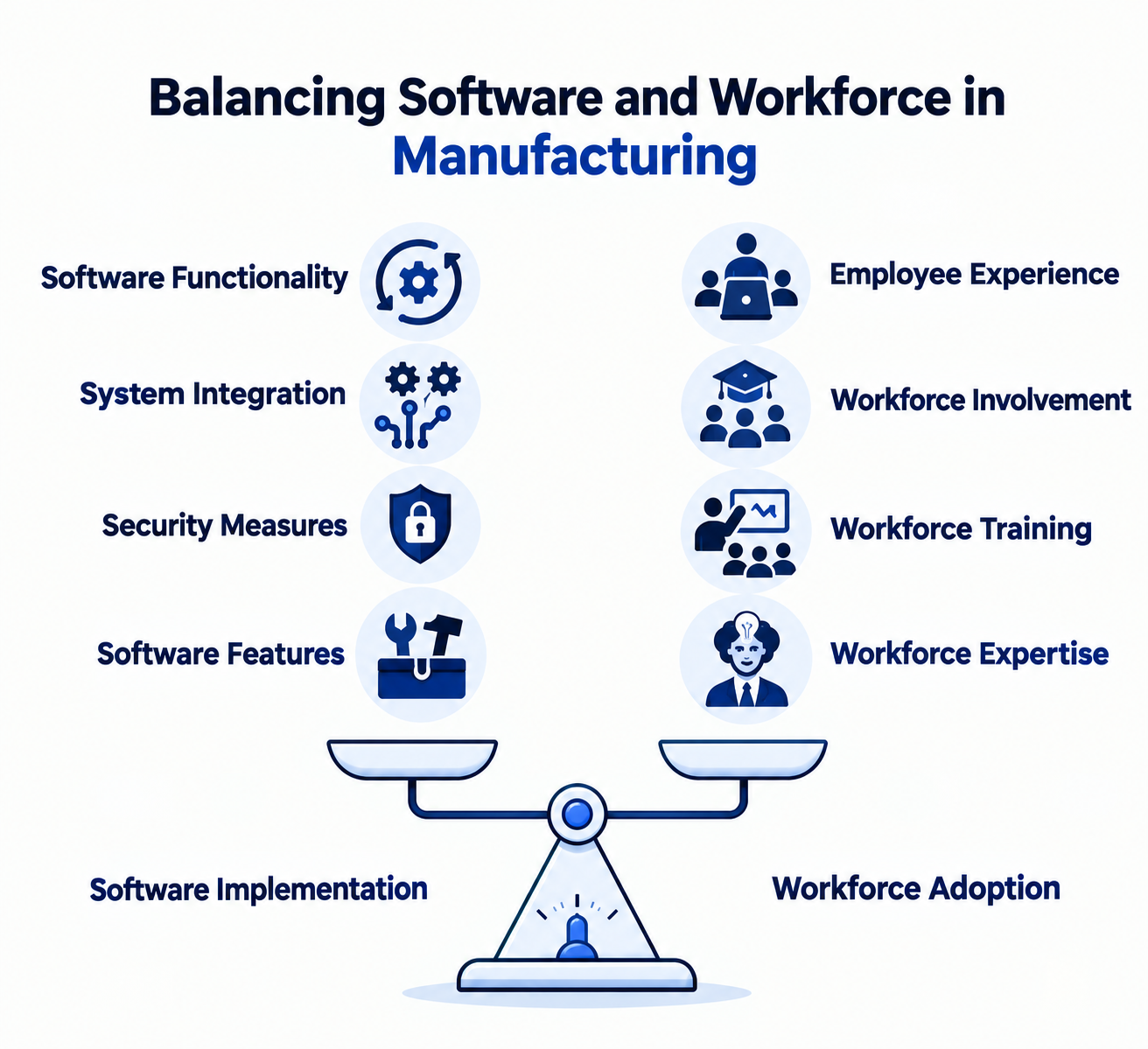
It may be a very nice system to demonstrate but not work well when employees are actually implementing it in a busy manufacturing environment.
Among the causes is bad data quality. The system can still give wrong results if the product codes are inconsistent, bills of materials are out of date, or the inventory is inaccurate.
Another challenge might be integration. A factory could have an ERP system and a separate warehouse management system, but they could also have older machinery and a newer application to track their manufacturing process. There will be more to it than just exchanging files. Teams should decide on the owner of each record, how updates are made to the record, and what happens if it fails to integrate.
Security is an issue, as well. Uncontrolled connection of industrial equipment to business networks can add to exposure. Network separation, limiting remote access, authentication, network backups, and tested recovery plans should all be considered by manufacturers.
Not to mention the labor force.
Operators and supervisors are aware of the constraints involved in production. They are aware of workarounds, challenging records and processes because of delays, and why. If employees are not involved in the introduction of new software, they can use their old spreadsheet system in addition to the new system.
That means two truths:
This can be avoided with a limited pilot. Test software in one production line or workflow, solicit feedback, fix problems, and make sure of impact before rolling out to other lines or facilities.
What To Do Before You Automate Anything?
Begin with the problem that takes up the time or money in your business most often.
With one manufacturer, it could be too much shutdown time. Another, it may be due to limited material resources, incorrect stock numbers, or constantly unpredictable production timetables.
Determine the impact of the problem on operations before the selection of a technology. Document its frequency, time, and whether it impacts delivery, adds manpower, material waste, or extra purchases.
After you have understood the problem, find out what information would prevent or minimize the problem.
Improving production reporting can be the initial step if managers don't know why production objectives are not being met. When jobs frequently stop due to component unavailability, then inventory accuracy and material planning need to be addressed. Integration might make more sense than one more standalone tool when there's a lot of back-and-forth between different applications.
This is also a good way to assess SaaS manufactured products. While cloud manufacturing apps can eliminate the need to manage software infrastructure in-house, businesses need to think about recurring software subscription fees, data ownership, integration possibilities, internet connectivity, and what happens when the cloud service goes down.
Outline measurable objectives before the implementation. Any discrepancies in stock, unexpected downtime, production delays, or the time it takes staff to compile reports can be monitored. After deployment, make comparisons to check if the investment has proven to be a worthwhile use of resources.
When Your Existing Systems Cannot Keep Up
There's nothing wrong with businesses in the manufacturing industry not needing another platform. They also sometimes require systems that are integrated and operate well together.
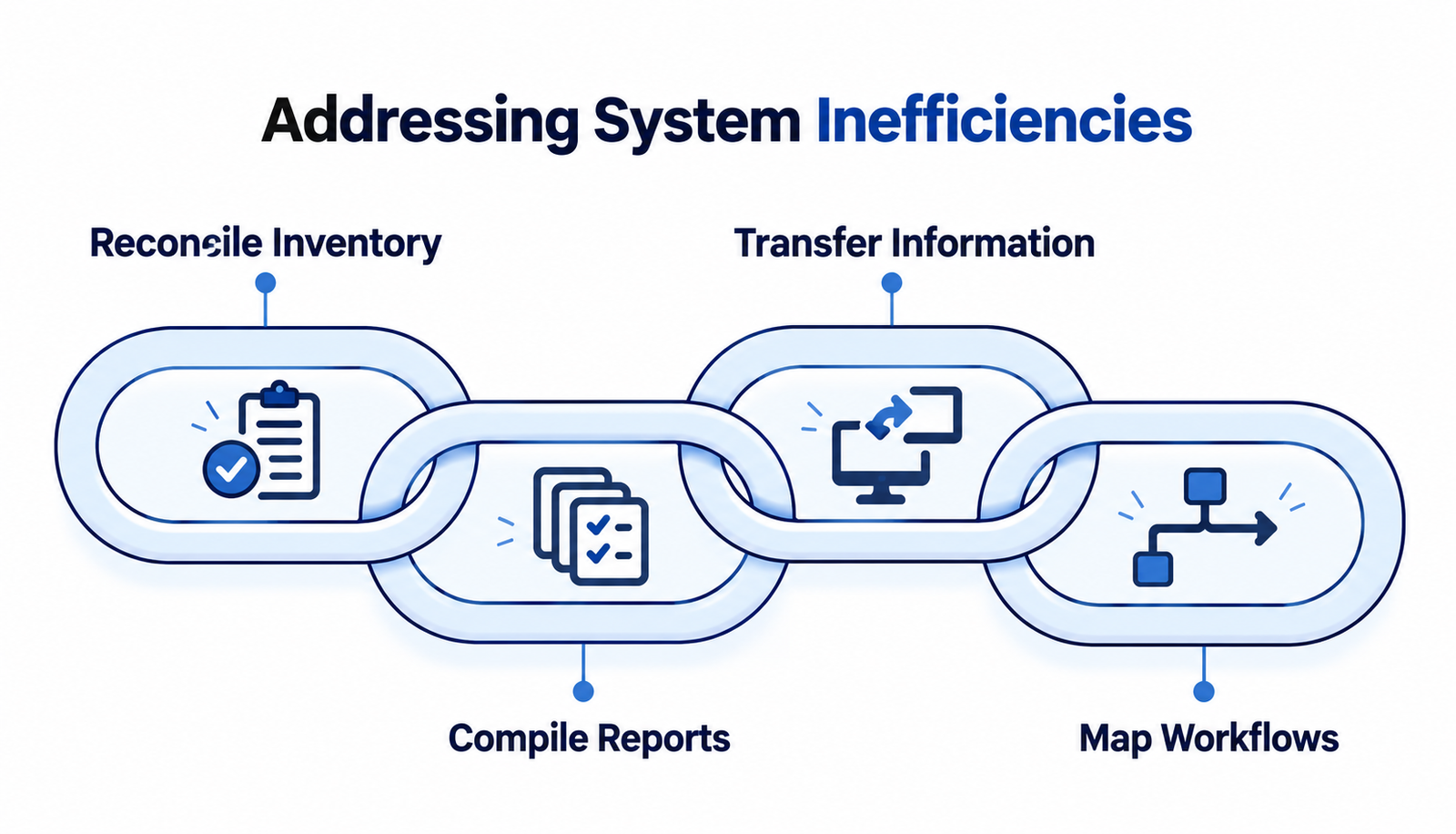
If hours go into reconciling inventory, manually creating production reports, and transferring data between systems, these repetitive tasks need further investigation.
Octoon Tech is a software and business application development company that specializes in cutting-edge, custom-designed solutions such as systems enabled via API and other integration options. That may involve designing a production dashboard for a manufacturing enterprise or integrating inventory data with other business software, or even building an app for an industry-specific manufacturing process.
This is subject to your equipment, existing setup, and the nature of the issue you are looking to deal with.
If delays continue to reappear because these conditions are due to the fact that information is put in different systems, begin by mapping one problematic workflow from end to end. Discern where information is collected, where it can be delayed, and where decisions are made based on information. That provides your team with a solid foundation to assess the viability of integrating or building an app.
Before embarking on a more significant software development project, Octoon Tech can be instrumental in determining the software requirements and technical options for that workflow.
A Better Factory Isn't Necessarily the One With the Most Technology
It's easy to associate industrial progress with more machinery, more sensors, and more automation. But technology only creates value when it improves the way a business operates.
A manufacturer with accurate inventory records, reliable production data, and well-connected systems may make better decisions than a larger facility using more advanced equipment but struggling with disconnected information.
Manufacturing software development is most useful when it addresses the practical realities of production: materials that must arrive on time, machines that need maintenance, workers who need accurate instructions, and customers who expect their orders when promised.
You don't have to transform the entire factory at once. Find the process that causes the most disruption, understand why it happens, and improve that process first.
As your business grows, the software can evolve with it. The objective isn't to automate every decision. It's to give your people the information and tools they need to keep production moving, control costs, and respond when something changes.
Could Better-Connected Systems Make Your Work Easier?
If your team is still juggling spreadsheets, chasing stock updates, or manually preparing production reports, it’s worth looking at where things are getting held up. Octoon Tech can help you explore ways to connect your existing systems or develop software for the gaps your current setup can’t fill.
Let’s talk about what’s slowing your team down.
Frequently Asked Questions
1. What is manufacturing software development?
Manufacturing software development involves creating or integrating software to manage production planning, inventory, equipment monitoring, and business operations. It helps manufacturers improve visibility, reduce manual work, and make informed decisions.
2. How does ERP software for manufacturing improve production management?
ERP software connects production planning with inventory, purchasing, finance, and other business functions. It helps teams track material availability, coordinate production schedules, and reduce delays caused by disconnected information. Need a connected manufacturing solution? Contact Octoon Tech to explore your integration options.
3. Do I need custom manufacturing software or an off-the-shelf production management system?
An off-the-shelf system may be sufficient if it meets your operational needs. Custom manufacturing software is useful when existing solutions cannot handle specific workflows, equipment integrations, or reporting requirements. Speak with Octoon Tech to assess your software requirements and find the right approach.
4. How can inventory tracking software prevent production delays?
Inventory tracking software provides visibility into stock levels, material availability, and stock movements. By identifying shortages and inaccurate records earlier, it helps manufacturers plan material requirements, avoid unnecessary purchases, and keep production schedules on track.